

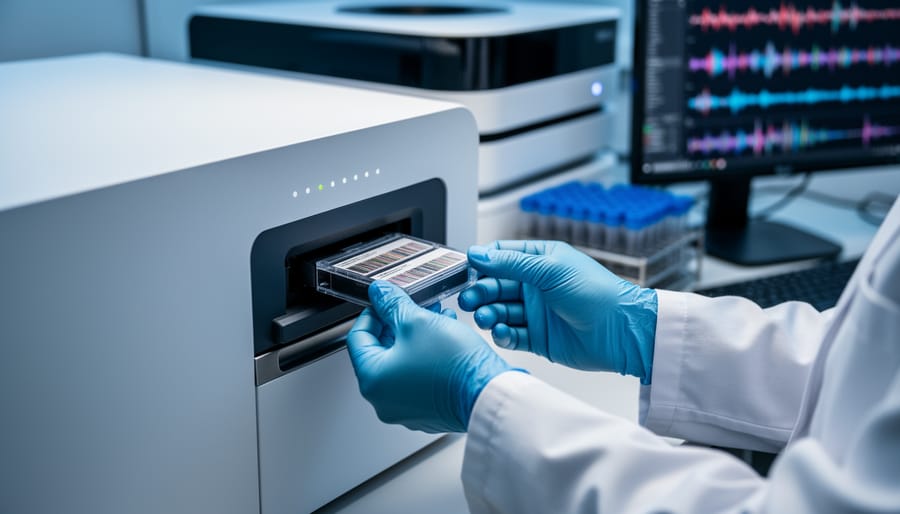
Evaluate sequencing platforms by matching their technical specifications to your project requirements: Sanger sequencing delivers gold-standard accuracy for targeted gene analysis and variant confirmation up to 1,000 base pairs, while next-generation sequencing (NGS) technologies like Illumina’s short-read platforms excel at whole-genome sequencing, transcriptomics, and high-throughput applications requiring millions of reads. For complex structural variants or long-range haplotyping, consider PacBio or Oxford Nanopore’s long-read technologies that generate sequences exceeding 10,000 base pairs with single-molecule resolution.
Select service providers based on validated quality metrics rather than cost alone: prioritize laboratories demonstrating ISO 17025 accreditation, documented quality scores (Q30 values above 80% for NGS), and transparent turnaround times with guaranteed data delivery schedules. Request sample quality reports showing coverage depth, error rates, and bioinformatics pipeline specifications before committing to large-scale projects.
Integrate sequencing services strategically within your modern genomics research workflow by establishing clear communication protocols with providers regarding sample preparation requirements, data format preferences, and analysis depth. Leading global providers offer multilingual technical support and consultation to optimize experimental design, preventing costly resequencing due to inadequate coverage or inappropriate platform selection.
Understand the complete service ecosystem: comprehensive providers bundle DNA extraction, library preparation, sequencing, and bioinformatics analysis, streamlining project timelines while maintaining chain-of-custody documentation essential for regulatory submissions and publication requirements. This integrated approach reduces technical variability and accelerates the path from sample collection to actionable genetic insights.
Understanding DNA Sequencing Services in Modern Genomics
DNA sequencing services have evolved from specialized academic facilities into comprehensive commercial solutions that support diverse research and industrial applications across the global scientific community. These services encompass the complete spectrum of genomic analysis, from sample preparation and quality control through sequencing platform selection, data generation, and bioinformatics analysis. Modern providers offer access to cutting-edge technologies including next-generation sequencing (NGS), third-generation long-read platforms, and emerging single-molecule approaches, enabling researchers to select methodologies aligned with their specific experimental requirements and budgetary constraints.
The transformation of DNA sequencing from a labor-intensive, months-long process to rapid, high-throughput analysis represents one of biotechnology’s most significant advances. Contemporary sequencing services leverage automated workflows and standardized protocols to deliver results with unprecedented speed and accuracy. This evolution has democratized access to genomic technologies, allowing research institutions of all sizes and across all geographical regions to incorporate sophisticated sequencing analyses into their investigative programs without maintaining expensive infrastructure or specialized expertise in-house.
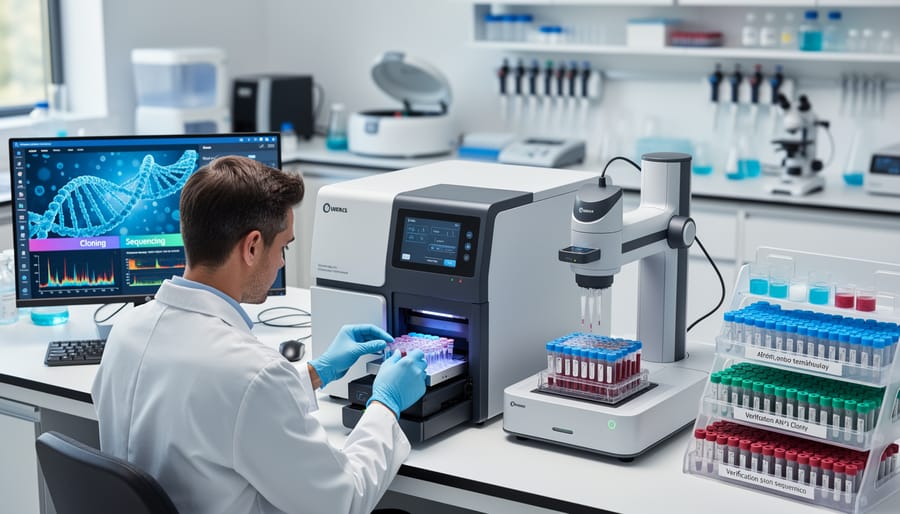
Integration between DNA sequencing and cloning services creates synergistic value for comprehensive genomic research programs. After identifying genetic variants or sequences of interest through sequencing analysis, researchers frequently require those sequences to be isolated, amplified, or expressed for functional studies. Service providers offering both capabilities streamline this workflow, maintaining sample integrity and experimental continuity while reducing turnaround times. This integrated approach proves particularly valuable for projects involving gene editing validation, synthetic biology applications, and therapeutic protein development.
Leading service providers distinguish themselves through global expertise and multilingual support, recognizing that scientific collaboration transcends geographical boundaries. These organizations maintain facilities across multiple continents, employ scientists fluent in diverse languages, and provide documentation and consultation services that accommodate international research teams. Such accessibility ensures that language barriers or regional limitations do not impede scientific progress.
When evaluating sequencing services, researchers should consider several critical factors beyond basic sequencing capacity. These include the provider’s experience with specific sample types, available library preparation protocols, depth of bioinformatics support, data security measures, and quality assurance standards. Understanding these parameters enables informed decision-making that aligns service capabilities with project requirements, ultimately supporting successful experimental outcomes and advancing genomic discoveries across disciplines.
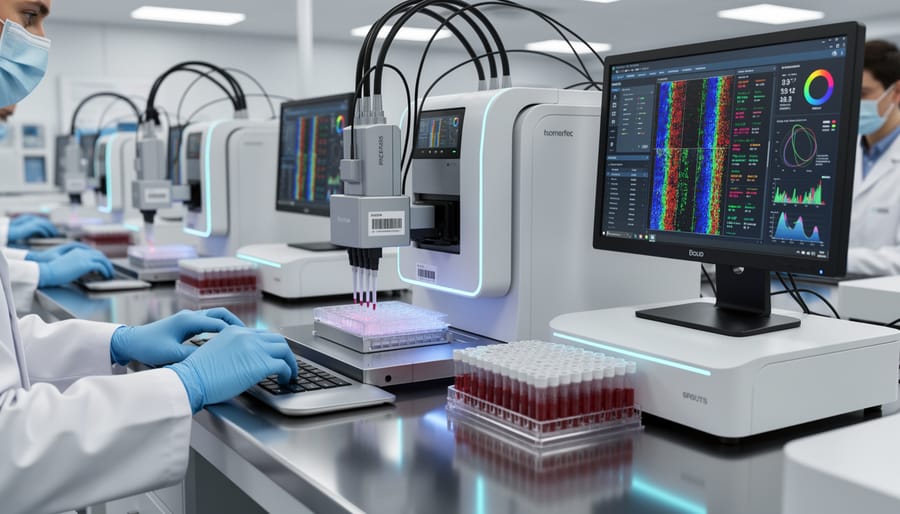
Core DNA Sequencing Technologies Available Through Service Providers
Sanger Sequencing for Precision Applications
Despite the proliferation of next-generation sequencing platforms, Sanger sequencing remains the benchmark for applications demanding exceptional accuracy and reliability. This capillary electrophoresis-based method delivers read lengths of 500-1000 base pairs with accuracy exceeding 99.9%, making it indispensable for precision applications where confidence in every nucleotide is paramount.
The superior accuracy of Sanger sequencing compared to accuracy ranges across sequencing methods establishes it as the gold standard for cloning verification, where researchers must confirm the fidelity of inserted sequences, detect unintended mutations, and validate vector constructs before proceeding with downstream experiments. Academic and industry laboratories worldwide rely on Sanger sequencing to verify plasmid constructs, authenticate gene edits in CRISPR applications, and validate PCR products with absolute certainty.
Targeted sequencing represents another critical application domain where Sanger sequencing excels. When investigating specific genetic variants, confirming mutations identified through screening methods, or analyzing small numbers of samples, Sanger sequencing offers a cost-effective and rapid solution. The technology’s straightforward data interpretation simplifies variant calling and eliminates many of the bioinformatic complexities associated with high-throughput platforms.
Leading DNA sequencing service providers offer comprehensive Sanger sequencing with global accessibility and multilingual technical support, ensuring researchers can access this foundational technology regardless of location. Services typically include primer design assistance, quality guarantees, and rapid turnaround times, enabling seamless integration into research workflows. For applications requiring absolute sequence certainty, Sanger sequencing remains the unmatched choice.
Next-Generation Sequencing for High-Throughput Projects
Next-generation sequencing has revolutionized high-throughput genomic research, enabling rapid, cost-effective analysis of complex biological samples at unprecedented scale. Modern NGS platforms, particularly those from Illumina and Ion Torrent, have become essential tools for researchers conducting whole-genome sequencing, transcriptomics, and metagenomics studies worldwide.
Illumina platforms dominate the NGS landscape through sequencing-by-synthesis chemistry, offering exceptional accuracy and scalability. These systems excel in whole-genome sequencing projects, delivering comprehensive coverage for human, plant, and microbial genomes. The dramatic reduction in sequencing costs, as documented in DNA sequencing cost data from the National Human Genome Research Institute, has made large-scale genomic studies accessible to research institutions globally.
Ion Torrent technology provides complementary advantages through semiconductor-based detection, eliminating optical components for faster run times and simplified workflows. This platform proves particularly valuable for targeted sequencing applications and clinical research requiring rapid turnaround.
For transcriptomics applications, both platforms enable RNA-seq studies that reveal gene expression patterns, alternative splicing events, and novel transcript discovery. Metagenomics projects benefit from the high throughput capacity, allowing researchers to characterize complex microbial communities from environmental, clinical, or agricultural samples.
Premium DNA sequencing service providers offer expertise across these platforms with multilingual support teams, ensuring researchers worldwide can access optimal technology for their specific experimental designs and throughput requirements.

Emerging Long-Read Sequencing Solutions
Long-read sequencing technologies have revolutionized genomic analysis by addressing limitations inherent in short-read approaches. Pacific Biosciences (PacBio) HiFi sequencing delivers highly accurate reads exceeding 10 kilobases, enabling precise resolution of repetitive genomic regions and complex structural variants that challenge traditional methods. Oxford Nanopore Technologies offers real-time sequencing with read lengths potentially spanning entire chromosomes, facilitating comprehensive genome assembly and immediate data analysis. These platforms prove particularly valuable for de novo assembly of previously uncharacterized genomes, detection of large-scale chromosomal rearrangements, and resolution of difficult-to-sequence regions such as centromeres and telomeres. When comparing long-read sequencing technologies, researchers should consider project-specific requirements including target read accuracy, throughput needs, and structural variant size ranges. Leading service providers now offer global expertise in optimizing long-read workflows, with multilingual support ensuring accessibility for international research teams navigating technology selection and experimental design for complex genomic investigations.
Integration of Sequencing with Cloning Services
Modern molecular biology projects often require seamless integration between DNA sequencing and cloning workflows to accelerate research timelines and ensure experimental success. Professional service providers have responded to this need by developing comprehensive platforms that combine both capabilities, eliminating the fragmentation that traditionally slowed down gene synthesis and vector construction projects.
The integration of sequencing with cloning services represents a strategic approach to molecular biology workflows. Rather than coordinating between multiple vendors or managing sequential processes in-house, researchers can access unified solutions where cloning and sequence verification occur within a single service framework. This integration proves particularly valuable for projects involving gene synthesis, expression vector construction, and mutagenesis studies where sequence accuracy is paramount.
Leading service providers typically follow a standardized integrated workflow:
- Initial consultation to define project requirements, including target gene sequences, vector preferences, and expression systems
- Gene synthesis or PCR amplification of the desired insert, with optimization for codon usage and removal of problematic secondary structures
- Cloning into the specified vector using restriction enzyme-based methods, Gateway cloning, Gibson assembly, or other appropriate techniques
- Transformation and colony selection to identify successful clones
- DNA extraction and preparation for sequencing analysis
- High-fidelity sequencing of the entire insert and relevant vector regions to verify sequence accuracy
- Bioinformatic analysis comparing sequencing results against the intended design
- Quality control reporting and delivery of verified plasmid DNA ready for downstream applications
These standardized steps ensure consistency across projects while allowing customization based on specific experimental needs. The bioinformatic verification component is particularly critical, as it identifies not only point mutations but also insertions, deletions, or frameshifts that could compromise construct functionality.
Global service providers distinguish themselves through multilingual support capabilities, enabling researchers worldwide to communicate project specifications clearly and receive detailed reports in their preferred language. This accessibility ensures that language barriers do not compromise the accuracy of complex molecular design requirements.
The practical advantages of integrated services extend beyond convenience. Consolidated workflows reduce turnaround times by eliminating inter-vendor coordination delays. They also improve quality control through single-source accountability, where one provider manages the entire process from design through verification. For industry professionals managing multiple constructs simultaneously, integrated platforms often provide project management tools that track progress across all samples, streamlining documentation for regulatory compliance or publication requirements.
These end-to-end solutions prove especially valuable for complex projects such as library construction, site-directed mutagenesis campaigns, and synthetic biology applications where iterative design-build-test cycles benefit from rapid turnaround and guaranteed sequence fidelity.
Key Considerations When Selecting a DNA Sequencing Service Provider
Quality Control and Data Accuracy Standards
Selecting a DNA sequencing service provider requires careful evaluation of their quality control frameworks and data accuracy standards. Reputable providers maintain ISO 17025 accreditation and other internationally recognized certifications that demonstrate adherence to rigorous quality assurance protocols. These certifications ensure that laboratories follow standardized procedures across sample handling, sequencing workflows, and data analysis pipelines.
Key quality metrics include read accuracy rates, typically exceeding 99.9% for contemporary platforms, and reproducibility scores that validate consistency across replicate runs. Leading service providers implement multi-tiered validation processes, including internal controls, reference standards, and blind sample testing to verify result reliability. Quality parameters such as Q-scores (Phred quality scores), coverage depth uniformity, and error rates should be transparently reported with each dataset delivery.
For researchers conducting critical genomic studies, providers offering comprehensive documentation of quality metrics, detailed run statistics, and full traceability of samples throughout the sequencing workflow are essential. Global service networks with multilingual technical support teams ensure that quality standards and data interpretation remain consistent across different regions and research contexts. This international expertise becomes particularly valuable when collaborating across borders or when regulatory compliance documentation requires translation and cultural adaptation for diverse scientific communities.
Technical Support and Consultation Capabilities
Comprehensive technical support distinguishes exceptional DNA sequencing service providers from basic processing facilities. Expert consultation begins at the experimental design phase, where seasoned scientists help researchers optimize sample preparation protocols, select appropriate sequencing depth, and determine the most cost-effective platform for specific research objectives. This early-stage guidance prevents costly errors and ensures that generated data will directly address the research questions at hand.
During data interpretation, bioinformatics specialists provide critical assistance in navigating complex analytical pipelines, identifying potential quality issues, and troubleshooting unexpected results. These consultations transform raw sequence data into actionable insights, particularly valuable when working with challenging samples or novel organisms where reference genomes may be limited or unavailable.
Leading service providers recognize the global nature of modern research collaborations and offer multilingual technical support teams fluent in major scientific languages including English, Mandarin, Japanese, German, and Spanish. This linguistic accessibility ensures that researchers worldwide receive clear explanations of technical concepts, detailed protocol recommendations, and prompt responses to urgent inquiries regardless of time zone constraints.
Ongoing technical partnerships extend beyond individual projects, with dedicated account managers tracking project histories and providing continuity across multiple submissions. This relationship-based approach enables personalized recommendations that evolve with research programs, ultimately accelerating discovery timelines and maximizing the value of sequencing investments.
Data Security and Confidentiality Protocols
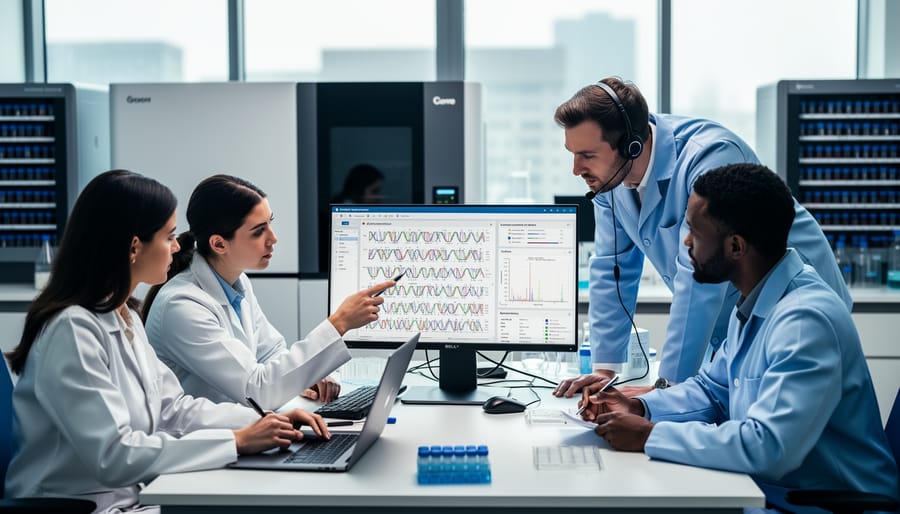
When evaluating DNA sequencing services, data security and confidentiality protocols represent paramount concerns for researchers managing sensitive genetic information and protecting intellectual property. Reputable service providers implement multi-layered security frameworks that address both physical and digital vulnerabilities throughout the sequencing workflow.
Essential security measures include end-to-end encryption of data transmission, secure cloud storage with role-based access controls, and compliance with international data protection regulations such as GDPR and HIPAA where applicable. Leading providers maintain ISO/IEC 27001 certification for information security management systems, demonstrating commitment to systematic risk assessment and mitigation.
Confidentiality agreements should be standard practice, with clear policies governing data retention, deletion timelines, and ownership rights. Researchers should verify whether providers maintain separate systems for different client projects to prevent cross-contamination of data and ensure that raw sequencing files and associated metadata remain exclusively accessible to authorized personnel.
For institutions operating across multiple regions, selecting providers with global expertise in navigating diverse regulatory landscapes ensures compliance with local data sovereignty requirements. Multilingual support teams can facilitate clear communication regarding security protocols and access procedures, reducing the risk of misunderstandings that could compromise data integrity. Request detailed documentation of security certifications, breach response protocols, and third-party audit results before committing to any sequencing partnership.
Applications of Professional DNA Sequencing Services Across Research Domains
Professional DNA sequencing services have become indispensable across diverse research domains, enabling scientific advancement through specialized technical expertise and infrastructure that many institutions find impractical to maintain in-house. Understanding how different sectors leverage these services helps researchers identify optimal approaches for their specific investigational needs.
| Research Domain | Typical Sequencing Needs | Common Project Types |
|---|---|---|
| Basic Research | Whole genome sequencing, transcriptomics, epigenetics | Gene discovery, evolutionary studies, functional genomics |
| Clinical Research | Targeted panels, exome sequencing, somatic variant detection | Disease mechanism studies, biomarker identification, patient stratification |
| Pharmaceutical Development | Pharmacogenomics, compound screening, target validation | Drug response prediction, precision medicine, therapeutic development |
| Agricultural Biotechnology | Plant/animal genome assembly, marker-assisted selection | Crop improvement, livestock breeding, trait mapping |
| Microbiology | Metagenomics, bacterial identification, antimicrobial resistance profiling | Pathogen surveillance, microbiome analysis, strain typing |
In fundamental research environments, sequencing services support hypothesis-driven investigations ranging from comparative genomics to regulatory network analysis. Academic researchers particularly benefit from the flexibility these services provide, accessing cutting-edge technologies without capital investment while receiving multilingual support that facilitates international collaborations. This accessibility democratizes genomic research, enabling smaller laboratories to contribute meaningfully to scientific discourse.
Clinical research applications increasingly rely on sequencing services for translational studies connecting laboratory findings to patient outcomes. Cancer genomics exemplifies this integration, where tumor profiling through comprehensive sequencing informs treatment decisions and identifies novel therapeutic targets. Service providers with global expertise ensure standardized methodologies across multi-center studies, critical for data comparability and regulatory compliance.
Pharmaceutical companies leverage sequencing services throughout drug development pipelines, from target identification to clinical trial patient selection. Pharmacogenomic profiling enables prediction of drug metabolism variations across populations, addressing efficacy and safety concerns before market release. The outsourcing model allows pharmaceutical researchers to scale sequencing capacity according to project phases without maintaining excess infrastructure during downtimes.
Agricultural biotechnology applications harness sequencing for crop enhancement and livestock improvement programs. High-throughput genotyping of breeding populations accelerates trait selection, while de novo genome assemblies provide reference frameworks for non-model organisms. Service providers offering specialized bioinformatics support help agricultural researchers navigate complex polyploid genomes and quantitative trait locus mapping.
Microbiological research, including public health surveillance and environmental monitoring, depends on rapid, accurate sequencing for pathogen identification and outbreak tracking. Metagenomic approaches characterize complex microbial communities without cultivation requirements, revealing ecosystem dynamics and potential biotechnological applications. Professional services ensure quality standards essential for actionable epidemiological data and regulatory reporting across international jurisdictions.
Cost-Benefit Analysis and Project Planning
Effective budgeting for DNA sequencing services requires understanding the multifaceted pricing structures offered by service providers. Most facilities calculate costs based on several variables: sequencing platform, read length, coverage depth, sample quantity, and turnaround time requirements. Illumina-based sequencing typically follows per-sample or per-lane pricing models, while long-read technologies like PacBio and Oxford Nanopore often charge based on flow cells or SMRT cells utilized. When evaluating quotes, researchers should clarify whether prices include library preparation, quality control assessments, bioinformatics support, and data storage—services that can significantly impact total project expenditure.
Strategic project planning begins with defining clear research objectives and selecting appropriate sequencing depth. For whole-genome sequencing, 30-fold coverage generally provides reliable variant detection in diploid organisms, though lower coverage (10-15x) may suffice for population studies. RNA sequencing projects benefit from pilot studies to determine optimal read depth, as gene expression analysis typically requires 20-30 million reads per sample, while rare transcript detection demands substantially deeper coverage. Multiplexing samples through barcoding reduces per-sample costs considerably, making this approach particularly valuable for large cohort studies.
International research teams should consider service providers offering global expertise and multilingual support to facilitate collaboration across borders and ensure clear communication regarding project specifications and results interpretation. Time-sensitive projects warrant careful evaluation of expedited service fees against research timelines and funding constraints.
Cost optimization strategies include batching samples to maximize sequencing run efficiency, selecting read lengths appropriate for specific applications rather than defaulting to maximum capacity, and negotiating volume discounts for ongoing projects. Researchers should also assess whether in-house bioinformatics capacity exists or if contracted analysis services provide better value. Requesting detailed project proposals from multiple providers enables comparative analysis of technical approaches, deliverables, and pricing structures. Well-designed pilot experiments, though representing upfront investment, prevent costly errors in full-scale studies and ultimately enhance research value while maintaining fiscal responsibility.
The Global Landscape of DNA Sequencing Services
The DNA sequencing industry has evolved into a truly global enterprise, with leading service providers establishing international networks to support research communities across continents. This worldwide infrastructure enables researchers to access cutting-edge sequencing technologies regardless of geographic location, while benefiting from localized expertise and support systems tailored to regional requirements.
International service providers maintain strategically positioned facilities that accommodate diverse time zones and facilitate faster sample processing and data delivery. These globally distributed operations ensure that research projects maintain momentum without delays caused by international shipping or communication barriers. Many providers have invested in regional laboratories that meet local biosafety standards and comply with country-specific regulations governing biological sample handling and data privacy.
Regulatory compliance represents a critical consideration in the global sequencing landscape. Service providers must navigate varying requirements across jurisdictions, from the European Union’s General Data Protection Regulation (GDPR) to specific biosecurity protocols in different countries. Established international providers maintain expertise in these regulatory frameworks, ensuring that sequencing projects adhere to applicable standards for sample import/export, data security, and ethical research practices. This compliance infrastructure protects researchers from potential legal complications and enables seamless collaboration across borders.
Multilingual technical support has emerged as a distinguishing feature of premium global service providers. Scientific consultation, project planning, and data interpretation services offered in multiple languages remove communication barriers that might otherwise compromise project outcomes. This linguistic accessibility ensures that complex technical concepts, experimental design considerations, and troubleshooting discussions occur with clarity and precision, regardless of the researcher’s primary language.
The combination of geographic accessibility, regulatory expertise, and multilingual support creates an inclusive ecosystem where researchers worldwide can leverage advanced sequencing capabilities to drive their scientific discoveries forward with confidence and efficiency.
Future Trends in DNA Sequencing Service Delivery
The landscape of DNA sequencing services is poised for transformative changes driven by technological innovation and evolving computational capabilities. Real-time sequencing platforms are advancing beyond current nanopore technologies to deliver immediate data streams during active sequencing runs, enabling researchers to make dynamic experimental decisions and terminate runs once sufficient coverage is achieved. This approach significantly reduces time-to-insight and optimizes resource allocation for time-sensitive projects.
Artificial intelligence and machine learning are revolutionizing how sequencing service providers handle data analysis pipelines, with neural networks now capable of base calling with unprecedented accuracy and variant detection algorithms that learn from global datasets. These AI-driven systems can identify complex structural variations and rare mutations that traditional computational approaches might overlook, while simultaneously reducing analysis time from days to hours. Leading service providers are integrating these automated systems with human expert oversight to ensure quality control and contextual interpretation.
The integration of end-to-end bioinformatics pipelines represents another significant trend, with service providers offering seamless workflows from sample submission through data interpretation. These comprehensive platforms incorporate automated quality metrics, interactive visualization tools, and customizable annotation databases that researchers can access through multilingual interfaces. Cloud-based infrastructure enables global collaboration, allowing research teams across different regions to access identical analytical environments and share results securely. Furthermore, predictive analytics tools are emerging that can suggest optimal sequencing strategies based on research objectives, sample types, and budget constraints. As these technologies mature, service providers with global expertise and robust computational infrastructure will increasingly differentiate themselves through their ability to deliver not just raw sequence data, but actionable biological insights supported by sophisticated analytical frameworks.
In an era where genomic discoveries are fundamentally reshaping our understanding of biology, medicine, and biotechnology, the strategic decision to partner with experienced DNA sequencing service providers has become increasingly critical for research success. The complexity of modern sequencing technologies, coupled with the sophisticated bioinformatics expertise required to generate meaningful insights from raw data, makes selecting the right service partner a determinant factor in achieving research objectives efficiently and cost-effectively.
The value proposition extends beyond simple data generation. Established service providers bring deep technical knowledge accumulated across diverse projects, enabling them to anticipate challenges specific to different sample types and research applications. This expertise translates directly into higher quality data, reduced turnaround times, and fewer experimental iterations—advantages that accelerate discovery timelines and optimize research budgets. Furthermore, providers with global reach offer multilingual support and understanding of regional regulatory requirements, facilitating international collaborations and ensuring compliance across different jurisdictions.
The right partnership transforms sequencing from a technical bottleneck into a competitive advantage. Service providers who invest in cutting-edge platforms while maintaining flexibility to recommend the most appropriate technology for each application deliver superior value compared to one-size-fits-all approaches. Their ability to integrate seamlessly with upstream processes such as molecular cloning and provide comprehensive downstream bioinformatics support creates a cohesive workflow that enhances data quality and interpretability.
As genomics continues to advance at remarkable speed, researchers who cultivate strong relationships with service providers position themselves to adopt emerging technologies rapidly and maintain their competitive edge. The decision to outsource sequencing represents not merely a transaction but a strategic alliance that can significantly influence research trajectories, publication impact, and ultimately, the pace of scientific discovery in your field.

