


Mortgage renewal anxiety triggers measurable physiological stress responses—elevated cortisol levels, disrupted sleep architecture, and persistent activation of the hypothalamic-pituitary-adrenal axis. When homeowners face decisions to sell my house fixed rate ending or negotiate new terms amid rising interest rates, the financial uncertainty creates a biochemical cascade indistinguishable from other acute stressors. Current research demonstrates that cannabidiol (CBD) modulates stress through interaction with the endocannabinoid system, specifically by inhibiting fatty acid amide hydrolase (FAAH) enzyme activity, thereby increasing endogenous anandamide availability. This mechanism produces anxiolytic effects without the psychoactive properties of tetrahydrocannabinol (THC).
Clinical investigations reveal CBD’s efficacy in reducing anticipatory anxiety and attenuating autonomic nervous system hyperactivation during stressful financial decision-making. Dosing protocols typically range from 300-600mg daily for acute stress episodes, with sublingual administration providing optimal bioavailability at 13-19% compared to oral routes. The compound demonstrates particular promise in mitigating rumination and catastrophic thinking patterns common during mortgage renewal periods. Understanding CBD’s molecular mechanisms provides homeowners with evidence-based intervention strategies while navigating complex financial transitions. This analysis examines peer-reviewed research on CBD’s stress-modulating properties, practical application protocols, and integration with conventional financial planning approaches to address mortgage renewal anxiety through scientifically validated methods.
The Neurobiology of Financial Stress: What Happens When Your Fixed Rate Ends
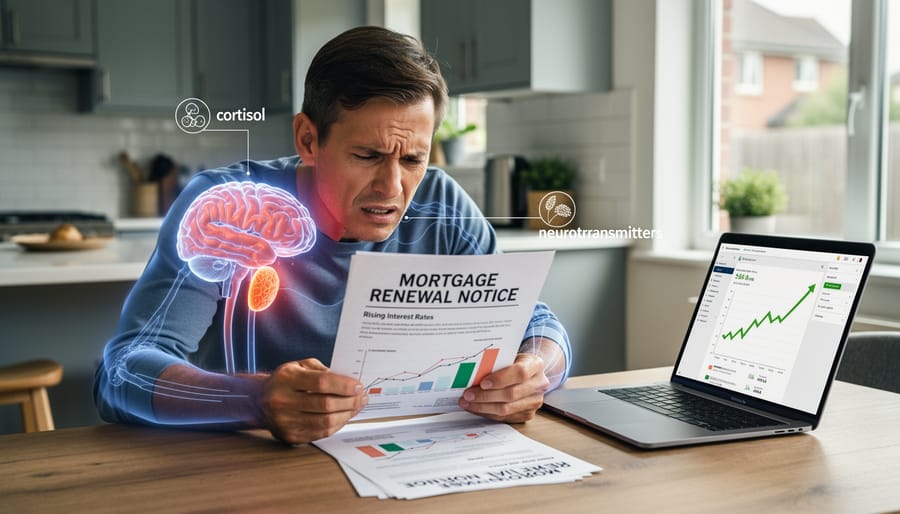
Cortisol Dysregulation and Chronic Stress Response
Mortgage-related financial concerns represent a persistent psychosocial stressor that activates the hypothalamic-pituitary-adrenal (HPA) axis, the primary neuroendocrine system governing stress responses. When individuals face mortgage renewal uncertainty, particularly during periods of rising interest rates, the hypothalamus releases corticotropin-releasing hormone (CRH), which stimulates the anterior pituitary to secrete adrenocorticotropic hormone (ACTH). This cascade culminates in cortisol release from the adrenal cortex.
Research by Steptoe and colleagues (2017) in Psychoneuroendocrinology demonstrated that chronic financial stress produces sustained elevation in both baseline cortisol levels and flattened diurnal cortisol rhythms, disrupting the normal circadian pattern essential for metabolic homeostasis and immune function. A longitudinal study by Bridges and colleagues (2012) examining mortgage arrears and health outcomes found significantly elevated hair cortisol concentrations—a validated biomarker of chronic HPA axis activation—in individuals experiencing housing payment difficulties compared to controls.
The sustained nature of mortgage-related stress distinguishes it from acute stressors. Unlike transient threats that allow HPA axis recovery, ongoing financial obligations create persistent activation. Chrousos (2009) documented that chronic cortisol dysregulation leads to glucocorticoid receptor desensitization, creating a cascade of physiological consequences including insulin resistance, cardiovascular dysfunction, and immune suppression. Understanding these biomolecular mechanisms provides scientific context for interventions targeting the endocannabinoid system, which exhibits bidirectional regulatory interactions with HPA axis function through cannabinoid receptor expression in hypothalamic and limbic structures.
Neuroinflammation and Decision-Making Impairment
Chronic financial stress, particularly during high-stakes periods such as mortgage renewal, triggers a cascade of neuroinflammatory responses that significantly compromise cognitive function. When the hypothalamic-pituitary-adrenal axis remains activated over extended periods, elevated cortisol levels stimulate the release of pro-inflammatory cytokines, including interleukin-6 (IL-6) and tumor necrosis factor-alpha (TNF-α). These inflammatory mediators cross the blood-brain barrier and directly interfere with prefrontal cortex functioning, the brain region responsible for executive functions essential to sound financial decision-making.
Research demonstrates that neuroinflammation disrupts neurotransmitter metabolism, particularly affecting dopaminergic and serotonergic pathways that regulate reward processing and risk assessment. This biochemical disruption manifests as diminished working memory capacity, impaired attention span, and reduced analytical capabilities—precisely the cognitive resources required when evaluating mortgage renewal options, comparing interest rates, or negotiating terms with lenders.
Studies utilizing neuroimaging techniques have revealed that individuals experiencing chronic stress show decreased activation in the dorsolateral prefrontal cortex during financial decision tasks, correlating with elevated inflammatory biomarkers in cerebrospinal fluid. Furthermore, microglial activation—the brain’s primary immune response—can persist weeks beyond the initial stressor, potentially extending cognitive impairment throughout the entire mortgage renewal process.
This neurobiological framework explains why homeowners often report difficulty concentrating on financial documents or feel overwhelmed by relatively straightforward calculations during mortgage negotiations, highlighting the critical need for evidence-based interventions that address both psychological stress and its underlying inflammatory mechanisms.
CBD’s Mechanism of Action: Understanding the Endocannabinoid System
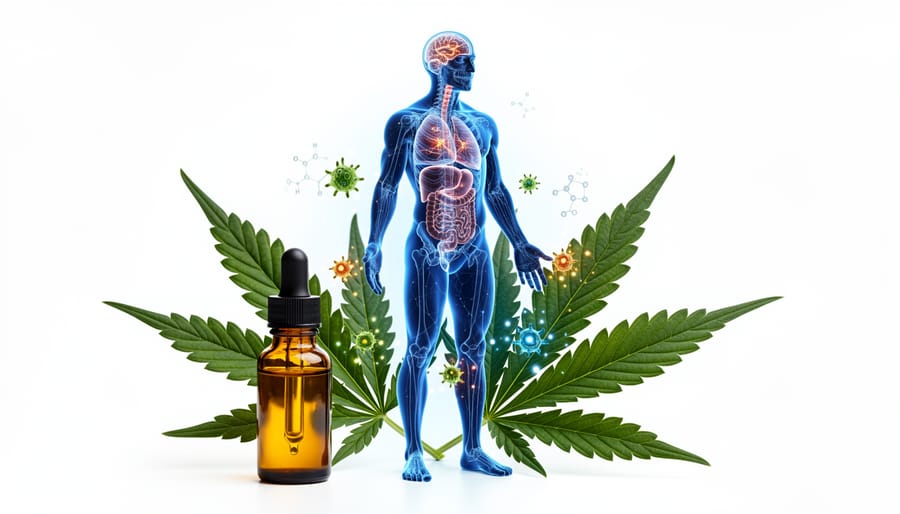
Cannabinoid Receptors and Stress Homeostasis
The endocannabinoid system (ECS) functions as a critical homeostatic regulator, particularly during periods of heightened stress such as financial uncertainty associated with mortgage renewal. This complex cell-signaling network comprises two primary cannabinoid receptors: CB1, predominantly localized in the central nervous system, and CB2, primarily expressed in peripheral tissues and immune cells.
During acute stress responses, the hypothalamic-pituitary-adrenal (HPA) axis activation triggers cortisol release, simultaneously affecting endocannabinoid tone. Research demonstrates that endogenous cannabinoids—anandamide and 2-arachidonoylglycerol (2-AG)—modulate stress-induced neurotransmitter release through retrograde signaling at CB1 receptors. This mechanism essentially acts as a biological brake system, preventing excessive excitatory neurotransmission that characterizes anxiety states.
Cannabidiol (CBD), a phytocannabinoid derived from Cannabis sativa, exhibits unique pharmacological properties within this framework. Unlike tetrahydrocannabinol (THC), CBD demonstrates low affinity for CB1 and CB2 receptors, instead functioning as a negative allosteric modulator and influencing receptor activity indirectly. CBD enhances endocannabinoid signaling by inhibiting fatty acid amide hydrolase (FAAH), the enzyme responsible for anandamide degradation, thereby prolonging endogenous cannabinoid availability.
Additionally, CBD interacts with non-cannabinoid receptors including serotonin 5-HT1A receptors, which play established roles in anxiety regulation and stress adaptation. This multi-target mechanism positions CBD as a potentially effective intervention for restoring physiological equilibrium during prolonged financial stress periods, offering a molecularly distinct approach compared to conventional anxiolytic pharmaceuticals.
CBD’s Interaction with Serotonergic Systems
Cannabidiol’s anxiolytic properties are fundamentally linked to its interaction with the serotonergic system, particularly through the 5-hydroxytryptamine 1A (5-HT1A) receptor. This receptor subtype plays a crucial role in regulating mood, anxiety responses, and stress adaptation—mechanisms directly relevant to individuals experiencing mortgage renewal anxiety.
Preclinical investigations have demonstrated that CBD acts as a positive allosteric modulator and partial agonist at 5-HT1A receptors located in critical brain regions including the dorsal raphe nucleus, hippocampus, and prefrontal cortex. These areas collectively govern emotional processing and stress response regulation. When CBD binds to these receptors, it facilitates serotonergic neurotransmission, promoting anxiolytic effects through enhanced inhibitory signaling pathways.
Research published in neuropsychopharmacology journals indicates that CBD’s interaction with 5-HT1A receptors occurs at concentrations achievable through standard oral administration (10-20 mg/kg in animal models, translating to approximately 300-600 mg in humans). Importantly, antagonist studies using WAY-100635, a selective 5-HT1A receptor blocker, have confirmed that blocking these receptors eliminates CBD’s anxiety-reducing effects, establishing a clear mechanistic relationship.
The temporal dynamics of this interaction are particularly relevant for acute stress management. CBD demonstrates rapid receptor engagement, with observable anxiolytic effects within 30-60 minutes of administration in controlled studies. This pharmacological profile suggests potential utility for managing acute mortgage-related anxiety episodes, though individual responses vary based on metabolic factors and baseline serotonergic tone.
Current evidence indicates that CBD’s effects on 5-HT1A receptors are dose-dependent and bell-shaped, meaning both insufficient and excessive doses may reduce efficacy. Ongoing clinical trials continue to refine optimal dosing parameters for anxiety-related conditions, with particular attention to real-world stress contexts including financial concerns.
Evidence-Based Applications: CBD for Stress-Related Physiological Symptoms
Current Clinical Research on CBD and Anxiety
Recent clinical investigations have provided substantial evidence regarding cannabidiol’s (CBD) anxiolytic properties, offering insights particularly relevant to acute stress responses such as those experienced during financial uncertainty. A 2019 double-blind, placebo-controlled trial published in The Permanente Journal examined 72 adults with anxiety and sleep disturbances. Results demonstrated that 79.2% of participants experienced decreased anxiety scores within the first month of CBD administration at doses ranging from 25-75 mg daily, with effects sustained throughout the three-month study period.
Neuroimaging studies have further elucidated CBD’s mechanisms in stress modulation. Research utilizing functional magnetic resonance imaging (fMRI) has shown that CBD administration significantly reduces activity in the amygdala, the brain region primarily responsible for fear and stress responses, while simultaneously enhancing connectivity in prefrontal cortex regions associated with emotional regulation. These findings align with the endocannabinoid system’s role in maintaining homeostatic balance during stressful conditions.
A 2020 systematic review analyzing 49 primary studies concluded that CBD demonstrates anxiolytic efficacy across multiple anxiety paradigms, including social anxiety disorder, generalized anxiety disorder, and stress-induced anxiety. Notably, research examining stress-response biomarkers has revealed that CBD administration correlates with reduced cortisol levels and decreased heart rate variability in acute stress scenarios, metrics directly applicable to situations involving financial decision-making pressure.
Current phase II clinical trials are investigating optimal dosing protocols and long-term safety profiles, with preliminary data suggesting favorable tolerability profiles. However, researchers emphasize the necessity for standardized formulations and consistent administration protocols to establish definitive therapeutic guidelines. The heterogeneity in study methodologies, including variations in CBD source quality, delivery mechanisms, and dosing regimens, represents an ongoing challenge requiring further investigation to optimize clinical translation.
Bioavailability and Dosing Considerations
Understanding CBD bioavailability is essential for optimizing its anxiolytic effects during periods of mortgage renewal stress. Bioavailability refers to the proportion of administered CBD that reaches systemic circulation and becomes available at the site of action within the endocannabinoid system.
Administration methods significantly influence pharmacokinetic profiles. Sublingual administration, achieved through tinctures placed under the tongue for 60-90 seconds, bypasses first-pass hepatic metabolism and achieves bioavailability of approximately 13-19%, with onset occurring within 15-45 minutes. Oral ingestion through capsules or edibles demonstrates lower bioavailability (6-15%) due to extensive first-pass metabolism by cytochrome P450 enzymes, particularly CYP3A4 and CYP2C19, but provides sustained plasma concentrations over 6-8 hours. Inhalation via vaporization offers the highest bioavailability (34-46%) and most rapid onset (2-5 minutes), though duration is shorter (2-4 hours).
For stress management applications, current evidence supports starting doses of 10-25 mg daily, with gradual titration based on individual response. Research examining CBD’s effects on anxiety-related conditions typically employs dosing ranges of 300-600 mg for acute interventions, though lower chronic doses (25-75 mg daily) may provide adequate stress buffering effects through sustained endocannabinoid system modulation.
Pharmacokinetic considerations include CBD’s lipophilic nature, which enhances absorption when consumed with dietary fats, and its elimination half-life of 18-32 hours following chronic administration. Individual variation in metabolism necessitates personalized dosing protocols. Clinically significant drug interactions may occur with medications metabolized through CYP450 pathways, including certain antidepressants and cardiovascular agents commonly prescribed to individuals experiencing financial stress. Consultation with healthcare providers familiar with cannabinoid pharmacology is recommended before initiating CBD therapy, particularly for individuals taking multiple medications.
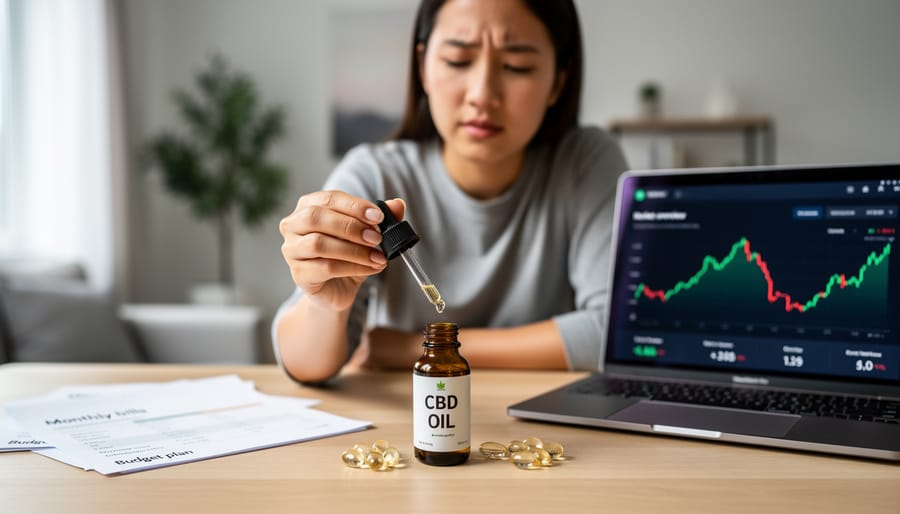
Practical Integration: CBD Protocols During Mortgage Decision-Making
Timing CBD Use with High-Stress Financial Events
Strategic timing of CBD supplementation can optimize its anxiolytic effects during critical mortgage renewal phases. Current research suggests CBD’s stress-modulating properties manifest through sustained endocannabinoid system modulation rather than acute intervention alone.
For rate shopping and comparative analysis activities, initiating CBD supplementation 5-7 days prior allows for gradual receptor binding optimization and homeostatic adjustment. Clinical evidence indicates CBD’s effects on cortisol regulation and HPA axis function demonstrate enhanced efficacy with consistent administration, supporting a preventative rather than reactive approach.
During high-stakes events such as broker consultations or lender negotiations, maintaining established dosing schedules proves more effective than sporadic use. The compound’s pharmacokinetic profile reveals peak plasma concentrations occur 2-4 hours post-administration for oral preparations, suggesting strategic timing approximately 90-120 minutes before scheduled meetings.
For decision-making periods requiring sustained cognitive clarity alongside stress reduction, twice-daily administration protocols have demonstrated superior outcomes in research settings. Morning doses support daytime analytical tasks, while evening administration addresses anticipatory anxiety that frequently disrupts sleep quality during financial stress periods.
Documentation of subjective responses through standardized anxiety assessment tools enables personalized timing optimization. Individual variations in metabolism, concurrent medications, and baseline stress physiology necessitate adaptive approaches rather than universal protocols. Professional consultation remains essential for integrating CBD supplementation with existing financial planning timelines and personal health considerations.
Complementary Stress-Reduction Approaches
While CBD represents a promising intervention for mortgage renewal stress, optimal outcomes emerge through integration with complementary evidence-based approaches. This multimodal strategy addresses the multifaceted nature of financial stress at both biological and behavioral levels.
Cognitive-behavioral techniques provide foundational support by restructuring maladaptive thought patterns associated with financial uncertainty. When combined with CBD’s anxiolytic properties mediated through endocannabinoid system modulation, individuals may experience enhanced capacity for rational financial planning and decision-making. Research demonstrates that mindfulness-based stress reduction (MBSR) protocols synergize with cannabinoid receptor activation to reduce hypothalamic-pituitary-adrenal axis hyperactivity, potentially offering superior cortisol regulation compared to single interventions.
Physical activity constitutes another critical component, as exercise-induced endocannabinoid elevation (particularly anandamide, the “bliss molecule”) complements exogenous CBD administration. This dual mechanism may amplify stress resilience while improving sleep quality, which frequently deteriorates during periods of financial anxiety.
Professional financial counseling addresses the practical dimensions of mortgage renewal, reducing uncertainty that perpetuates chronic stress responses. When physiological stress is managed through CBD and behavioral techniques, cognitive resources become available for effective financial problem-solving.
This integrative framework recognizes that mortgage-related stress operates across biological, psychological, and practical domains, requiring comprehensive intervention strategies. Global research initiatives continue examining these synergistic approaches across diverse populations and cultural contexts.

Safety Considerations and Drug Interactions
While CBD demonstrates a favorable safety profile in clinical research, individuals considering its use for mortgage renewal stress must understand important pharmacological considerations and potential drug interactions.
CBD’s primary metabolic pathway involves the hepatic cytochrome P450 enzyme system, particularly the CYP3A4 and CYP2C19 isoforms. This enzymatic pathway is shared by approximately 60% of clinically prescribed medications, creating potential for drug-drug interactions. CBD acts as both a competitive inhibitor and mechanism-based inactivator of these enzymes, potentially altering plasma concentrations of co-administered pharmaceuticals. This interaction mechanism is particularly relevant for individuals managing stress-related conditions who may already be taking anxiolytic medications, antidepressants, or cardiovascular drugs commonly prescribed during high-stress periods.
Medications requiring particular attention include benzodiazepines, selective serotonin reuptake inhibitors, calcium channel blockers, and anticoagulants such as warfarin. The interaction potential necessitates consultation with healthcare providers before initiating CBD supplementation, especially for individuals on chronic medication regimens. Pharmacokinetic studies indicate that CBD can increase serum levels of certain drugs by inhibiting their metabolism, potentially leading to adverse effects or toxicity at otherwise therapeutic doses.
Contraindications include pregnancy and lactation, as insufficient human data exists regarding developmental safety. Individuals with hepatic impairment should exercise caution, as compromised liver function may affect CBD metabolism and clearance. Additionally, those with hypersensitivity to cannabinoids or carrier oils commonly used in CBD formulations should avoid use.
Quality control represents a critical consideration in the largely unregulated CBD market. Independent analyses have revealed significant discrepancies between labeled and actual CBD content, with some products containing negligible cannabidiol or undisclosed tetrahydrocannabinol levels. Consumers should prioritize products with third-party laboratory certification, including verification of cannabinoid content, absence of heavy metals, pesticides, and microbial contaminants. Certificate of Analysis documentation provides transparency regarding product composition and purity.
The absence of standardized dosing guidelines and long-term safety data underscores the importance of conservative dosing strategies and ongoing medical supervision, particularly for vulnerable populations or those with complex medication regimens.
Regulatory Landscape and Quality Assurance
The regulatory framework governing cannabidiol (CBD) varies significantly across jurisdictions, creating a complex landscape for consumers seeking quality products to manage mortgage renewal stress. In Canada, CBD derived from cannabis plants falls under the Cannabis Act and is regulated by Health Canada, requiring licensed retailers and standardized product testing. Hemp-derived CBD products containing less than 0.3% tetrahydrocannabinol (THC) are regulated differently under the Industrial Hemp Regulations. Internationally, regulatory approaches range from stringent pharmaceutical-grade requirements in the European Union to more permissive frameworks in the United States, where CBD legality depends on state legislation and THC content thresholds.
Quality assurance in CBD products relies heavily on third-party laboratory testing, which analyzes cannabinoid content, terpene profiles, heavy metal contamination, pesticide residues, and microbial contaminants. A Certificate of Analysis (COA) serves as the primary documentation of these assessments and should be readily accessible for any reputable product. When interpreting a COA, verify that the testing laboratory is ISO/IEC 17025 accredited, indicating adherence to international standards for testing competence. The document should confirm the CBD concentration matches label claims within reasonable margins (typically plus or minus 10%), demonstrate THC levels below legal thresholds, and show non-detectable levels of harmful contaminants.
Critical quality indicators include full-spectrum versus isolate designations, extraction methodology (CO2 extraction being preferable to solvent-based methods), and batch-specific testing rather than generic results. For individuals managing financial stress, selecting products with consistent dosing and verified purity minimizes additional variables when assessing therapeutic efficacy. The presence of comprehensive COAs, transparent sourcing information, and Good Manufacturing Practice (GMP) certification collectively indicate manufacturer commitment to quality standards essential for both safety and reproducible stress-management outcomes.
The biomolecular evidence supporting CBD’s role in stress management during financial transitions, including mortgage renewal anxiety, reflects sophisticated interactions within the endocannabinoid system. Through modulation of CB1 and CB2 receptor activity, enhancement of anandamide signaling, and influence on serotonergic pathways, CBD demonstrates plausible mechanisms for attenuating the hypothalamic-pituitary-adrenal axis hyperactivation characteristic of chronic stress responses. However, the current evidence base, while promising, remains in developmental stages with significant gaps in standardized dosing protocols, long-term safety profiles, and study populations specifically experiencing financial stressors.
Evidence-based decision-making necessitates critical evaluation of individual health contexts, potential drug interactions, and product quality verification through third-party testing for cannabinoid content and contaminant absence. Healthcare provider consultation remains essential, particularly for individuals with pre-existing medical conditions or concurrent pharmaceutical regimens. The endocannabinoid system’s fundamental role in homeostatic regulation positions CBD as a scientifically rational intervention candidate, yet rigorous clinical validation specific to financial stress contexts is needed. Managing physiological stress during mortgage transitions benefits from multimodal approaches combining evidence-supported interventions, professional financial guidance, and individualized stress reduction strategies informed by current biomolecular understanding.

