

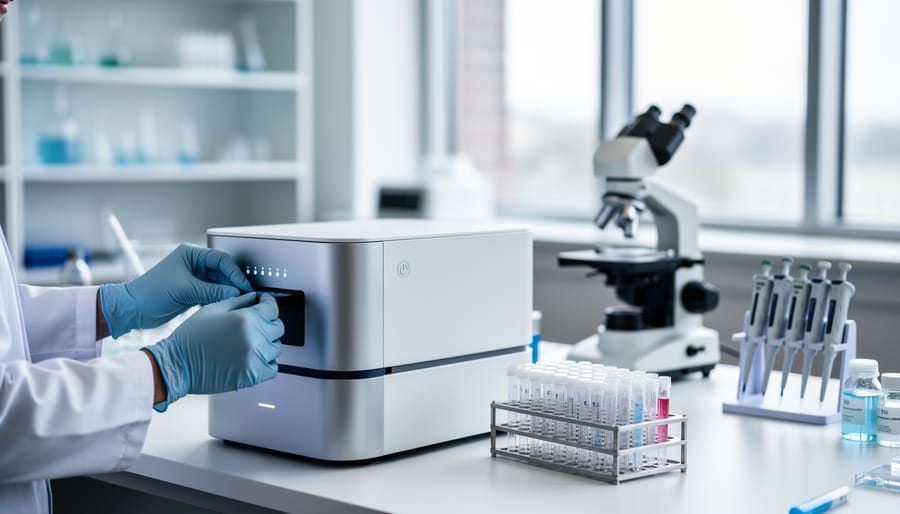
The University of Michigan Advanced Genomics Core stands as one of North America’s premier genomic sequencing facilities, operating at the intersection of cutting-edge technology and accessible research support since its establishment. Located in Ann Arbor, this core facility serves researchers across multiple continents, offering comprehensive DNA sequencing services that range from conventional Sanger sequencing to sophisticated next-generation platforms including Illumina NovaSeq X Plus and PacBio Revio systems.
What distinguishes the UMich sequencing core in 2026 is its commitment to both technical excellence and researcher accessibility. The facility maintains ISO 17025 accreditation and processes over 45,000 samples annually from academic institutions, biotechnology companies, and clinical research programs worldwide. Their service portfolio extends beyond basic sequencing to encompass library preparation, quality control validation, bioinformatics consultation, and custom protocol development.
For international researchers evaluating sequencing providers, the core offers multilingual support staff fluent in Mandarin, Spanish, and Arabic, addressing a common barrier in specialized genomic services. Their transparent pricing structure and rapid turnaround times (typically 48-72 hours for standard RNA-seq projects) make them competitive with commercial alternatives while providing the collaborative advantage of an academic environment.
This facility represents more than infrastructure. It embodies a research partnership model where core scientists actively contribute to experimental design, troubleshoot technical challenges, and remain current with emerging sequencing chemistries and platforms. Whether you’re initiating a pilot single-cell RNA sequencing experiment or scaling a population genomics study requiring hundreds of whole genomes, understanding what the UMich sequencing core offers can fundamentally shape your project’s trajectory and success rate.
Overview of the University of Michigan Sequencing Core
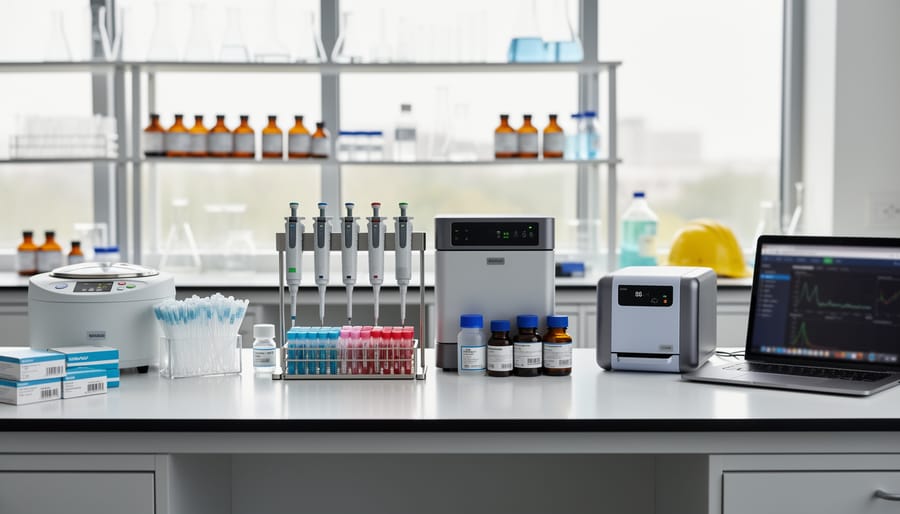
The University of Michigan Sequencing Core operates as a centralized genomics facility within one of North America’s premier research institutions, providing technical infrastructure that enables investigators across disciplines to accelerate research through access to cutting-edge sequencing platforms and expert support. Established to consolidate genomic resources under shared governance, the core serves as a bridge between theoretical research questions and practical molecular data generation, reducing barriers to entry for laboratories that lack in-house sequencing capacity.
Organizationally, the facility functions under the administration of the University of Michigan Medical School, though its services extend far beyond clinical applications. The core’s mission centers on democratizing access to high-throughput sequencing technologies while maintaining the technical rigor necessary for publication-quality data generation. This dual mandate requires balancing service speed with methodological precision, a challenge managed through tiered service offerings that accommodate both routine projects and specialized applications requiring custom protocol development.
The core primarily serves University of Michigan researchers across its Ann Arbor campus, including faculty from molecular biology, ecology, microbiology, and computational disciplines. However, the facility also accepts external submissions from academic institutions, nonprofit research organizations, and biotechnology companies that require validated sequencing workflows. This mixed-client model allows the core to maintain operational sustainability while exposing internal researchers to diverse project types that inform best practices.
Staff composition reflects the facility’s technical breadth, with molecular biologists handling sample processing, bioinformaticians managing data pipelines, and project coordinators facilitating communication between researchers and laboratory personnel. This organizational structure ensures that clients receive guidance appropriate to their expertise level, whether they need basic Sanger sequencing or require consultation on experimental design for complex multi-omics studies.
Unlike purely commercial providers, the UMich Sequencing Core integrates educational functions into its operations. Graduate students and postdoctoral researchers can receive hands-on training in library preparation techniques and quality control procedures, creating a knowledge-transfer pathway that strengthens the broader research community. This positioning as both service provider and educational resource distinguishes academic cores from contract facilities focused exclusively on throughput maximization.
Core Services and Technologies Offered
Next-Generation Sequencing Capabilities
The University of Michigan Sequencing Core operates Illumina NovaSeq 6000 and NextSeq 2000 platforms as its primary NGS instruments in 2026, providing researchers with flexible throughput options from small pilot studies to large-scale population genomics projects. The NovaSeq 6000 delivers up to 6 terabases of data per flow cell, making it suitable for whole genome sequencing at depths ranging from 30× for human samples to higher coverage for complex genomes, while the NextSeq 2000 offers mid-throughput capabilities ideal for transcriptome profiling and targeted panels.
For whole exome sequencing, the core uses established capture kits that target approximately 45 megabases of coding regions, achieving 95-98% coverage at 20× depth with standard protocols. Transcriptome applications include both bulk RNA-seq and stranded library preparations that preserve directional information, with typical read depths of 20-40 million paired-end reads per sample for differential expression studies. The facility supports poly-A selection and ribosomal depletion methods depending on experimental requirements.
Targeted sequencing projects benefit from custom amplicon panels and hybrid capture approaches, with the core providing design consultation to optimize panel size and genomic coverage. These sequencing services accommodate cohorts from a few dozen to thousands of samples, with multiplexing strategies that balance per-sample costs against required coverage depth for variant detection.
Cloning and Library Preparation Services
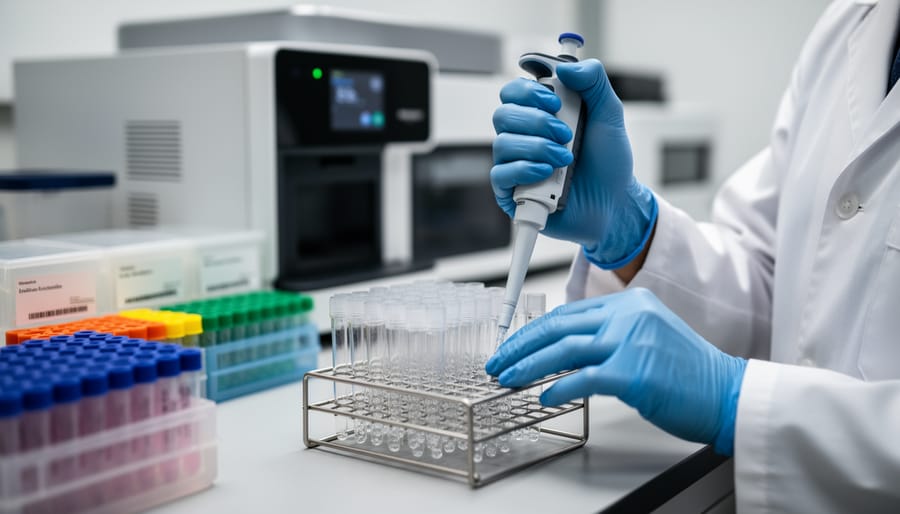
The UMich Sequencing Core provides comprehensive cloning and library preparation services that bridge traditional molecular biology techniques with modern sequencing workflows. Researchers can access a full spectrum of cloning methodologies, from conventional restriction enzyme-based approaches to advanced Gateway and Gibson Assembly systems, enabling precise construct generation for functional genomics studies and expression analysis.
Library construction protocols encompass both RNA-seq and DNA-seq applications, with strand-specific library preparation available for directional transcriptome profiling. The core employs Illumina-compatible library prep kits optimized for varying input amounts, accommodating projects with limited starting material through low-input protocols. For specialized applications, the facility offers customized library construction that integrates unique barcoding schemes and adapter designs tailored to specific experimental requirements.
Sample preparation support extends beyond standard protocols. The core’s technical staff provides consultation on RNA extraction quality assessment, DNA fragmentation optimization, and contamination mitigation strategies particularly relevant for microbiome and environmental samples. Size selection services using automated electrophoresis systems ensure precise fragment distribution for targeted sequencing applications.
Quality control checkpoints are integrated throughout the workflow, with BioAnalyzer or TapeStation analysis confirming library quality before sequencing runs. This multi-step validation reduces failed sequencing attempts and optimizes data yield. For complex projects involving pooled samples or multiplexed designs, the core offers normalization services and quantification protocols using fluorometric and qPCR-based methods, ensuring balanced representation across all samples in the final sequencing output.
Specialized Genomic Applications
The UMich Sequencing Core has expanded its portfolio to address increasingly specialized research questions through advanced genomic applications. Single-cell RNA sequencing allows investigators to profile transcriptomes from individual cells, revealing cellular heterogeneity that bulk sequencing methods miss, critical for understanding tumor microenvironments, immune responses, and developmental biology. The facility supports both droplet-based and plate-based single-cell platforms, accommodating projects ranging from hundreds to tens of thousands of cells.
For microbiome researchers, metagenomic services sequence entire microbial communities directly from environmental or clinical samples, bypassing the need for culture. This approach identifies novel organisms and functional pathways in complex ecosystems, from soil to the human gut. The core’s epigenomic services map DNA methylation patterns, histone modifications, and chromatin accessibility through techniques like bisulfite sequencing and ATAC-seq, connecting gene regulation to phenotype. Similar capabilities in single-cell and epigenomics exist at other academic centers, reflecting the widespread adoption of these methods in 2026. Additionally, spatial transcriptomics preserves tissue architecture while capturing gene expression, offering context that dissociated cell methods cannot provide, particularly valuable for neuroscience and cancer studies.
Quality Standards and Accreditation
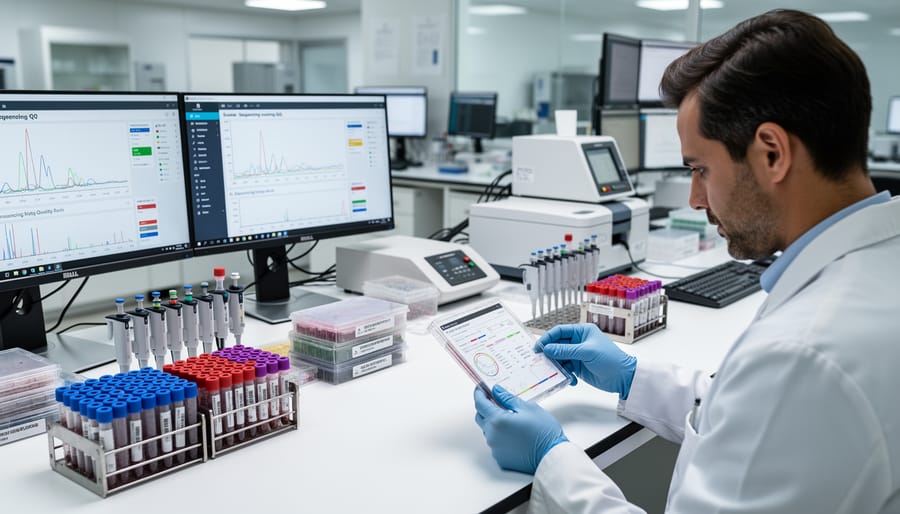
The University of Michigan Sequencing Core maintains rigorous quality control frameworks that align with both institutional research standards and industry best practices for genomic data generation. Quality assurance begins at sample intake, where technicians verify sample integrity using spectrophotometry and microfluidic electrophoresis to assess DNA or RNA quantity, purity, and degradation status. This initial checkpoint prevents downstream failures and ensures that only samples meeting defined thresholds proceed to library preparation.
Throughout the sequencing workflow, the core implements multiple validation checkpoints. Library preparation includes quality verification at each stage, fragmentation assessment, adapter ligation efficiency, and size selection validation. Before sequencing runs begin, library concentration and fragment distribution undergo quantitative PCR verification and bioanalyzer profiling. These controls minimize failed runs and ensure that sequencing capacity is used efficiently.
Data quality monitoring occurs in real time during sequencing. The core tracks metrics including cluster density, Q30 scores (the percentage of bases with 99.9% accuracy), read depth distribution, and error rates across each flow cell. Technical staff review these parameters during runs, allowing intervention if quality thresholds are not met. Post-sequencing, bioinformatics pipelines apply additional quality filters, flagging issues like adapter contamination, low-complexity sequences, or unexpected coverage patterns.
The core maintains standard operating procedures that align with CLIA laboratory standards, though specific genomic research services typically operate under research-use-only guidelines rather than clinical diagnostic certification. Documentation practices ensure full traceability, each sample receives unique identifiers tracked through laboratory information management systems that log every processing step, reagent lot, instrument used, and analyst involved.
For reproducibility, the core provides comprehensive metadata with deliverables: sequencing chemistry details, instrument platforms, base-calling software versions, and quality metrics summaries. Researchers receive not just sequence data but the contextual information necessary to interpret results and replicate methods. The facility participates in periodic external quality assessments and maintains equipment calibration schedules verified by manufacturer service agreements, ensuring consistency across projects and over time.
Accessing UMich Sequencing Core Services
Eligibility and Collaboration Models
The University of Michigan Sequencing Core operates on a tiered access model designed to accommodate diverse researcher needs while maintaining sustainable operations. Primary access is granted to UMich faculty, staff, and students, who benefit from subsidized institutional pricing that reflects the university’s commitment to supporting internal research programs. These internal users typically pay rates that cover direct operational costs rather than full cost recovery.
External academic researchers from other universities and research institutions can access the core’s services at higher rates that include appropriate overhead charges. Many cores establish reciprocal agreements with peer institutions, allowing researchers to leverage specialized capabilities not available at their home facilities. The differential pricing between internal and external users generally ranges from 25% to 50%, though exact figures depend on project complexity and resource requirements.
Industry partners and commercial entities represent a third tier, with pricing structures that reflect full cost recovery plus applicable administrative fees. These collaborations often involve custom service agreements, particularly for proprietary projects requiring confidentiality provisions or specialized protocol development. The core maintains flexibility in structuring these partnerships to accommodate everything from single-project engagements to ongoing research alliances.
For international researchers, the core provides multilingual consultation support to clarify submission requirements, customs documentation for sample shipping, and payment arrangements that accommodate diverse institutional billing systems. Collaborative research projects involving multiple institutions may qualify for consortium pricing models that distribute costs equitably among participating organizations based on contribution and usage patterns.
Project Consultation and Support
The UMich Sequencing Core provides comprehensive consultation services to help researchers design robust experiments and maximize the value of their sequencing projects. Initial consultations typically address experimental objectives, appropriate platform selection, and required sample quality metrics. Core staff members with expertise in genomic technologies work directly with research teams to determine optimal sequencing depth, read length specifications, and multiplexing strategies based on project budgets and scientific goals.
Sample preparation guidance constitutes a critical component of the consultation process. Specialists advise on RNA integrity requirements, DNA concentration thresholds, and library input amounts specific to each sequencing platform. They also help troubleshoot problematic samples and suggest alternative approaches when standard protocols prove unsuitable. For complex applications like single-cell sequencing or chromatin immunoprecipitation studies, consultants provide protocol recommendations tailored to specific cell types or tissue sources.
Bioinformatics support extends beyond basic data delivery. While primary data processing generates standard outputs such as FASTQ files and quality metrics, the core offers guidance on downstream analysis pipelines, software tool selection, and interpretation frameworks. Researchers can schedule follow-up consultations to discuss alignment strategies, variant calling parameters, or differential expression workflows. For projects requiring specialized analysis, the core maintains collaborative relationships with university bioinformatics groups, facilitating connections between wet-lab scientists and computational experts to ensure comprehensive project support from experimental design through final data interpretation.
Comparative Positioning: UMich Core in the Global Context
The UMich Sequencing Core operates within a highly competitive landscape that includes both academic sequencing facilities and commercial genomics service providers. When evaluated against peer institutions such as the Broad Institute, Stanford Genomics Center, and EMBL’s Genomics Core Facility in Heidelberg, the University of Michigan facility demonstrates comparable technical capabilities while offering distinct advantages in accessibility and collaborative frameworks. The core’s academic positioning allows for flexible pricing structures and extended consultation periods that commercial entities often cannot match, particularly beneficial for exploratory research projects requiring iterative experimental design.
Commercial providers like Illumina’s sequencing services, BGI Genomics, and Genewiz excel in high-throughput standardized workflows with rapid turnaround times. These companies process thousands of samples monthly and maintain streamlined submission portals optimized for routine applications. However, the UMich Sequencing Core differentiates itself through personalized project management and willingness to accommodate non-standard protocols, custom modifications, and novel experimental approaches that fall outside commercial service catalogs. Researchers developing new methodologies or working with challenging sample types frequently find academic cores more receptive to technical problem-solving and protocol optimization.
Geographic considerations influence facility selection significantly. European researchers benefit from proximity to facilities like Edinburgh Genomics or Max Planck’s sequencing infrastructure, which streamlines sample shipping and in-person consultations. The UMich facility has strengthened its position for international collaborations by establishing clear communication protocols and providing documentation in multiple languages for common procedures. While not offering fully multilingual staff across all service tiers, the core maintains partnerships with international research networks that facilitate cross-border projects and accommodate diverse collaboration models.
Turnaround times represent another critical comparison dimension. Commercial providers typically deliver standard RNA-seq or whole-genome sequencing results within two to three weeks, whereas academic facilities including UMich often require four to six weeks depending on queue depth and project complexity. This extended timeline reflects the core’s dual commitment to service provision and method development, a trade-off that benefits researchers who value technical expertise over speed. For time-sensitive projects requiring guaranteed completion dates, commercial services maintain an advantage, while investigator-driven studies requiring technical input throughout the workflow align better with academic core capabilities.
Recent Innovations and Future Directions (2026)
The UMich Sequencing Core has integrated several transformative technologies throughout 2026 that directly address persistent challenges in genomic research. Long-read sequencing platforms now complement traditional short-read systems, enabling researchers to resolve structural variants, repetitive regions, and complex genomic rearrangements that previously required multiple methodologies. This dual-platform approach provides particular advantages for de novo assembly projects and full-length transcript characterization without the fragmentation limitations of earlier methods.
Spatial transcriptomics capabilities represent another significant expansion. By combining sequencing with spatial resolution, the core now supports investigations that preserve tissue architecture context, a critical requirement for understanding cellular microenvironments in cancer biology, developmental studies, and neuroscience. The technology allows researchers to map gene expression patterns while maintaining the spatial relationships between cells, generating datasets that link molecular information to morphological features.
Automation enhancements streamline previously labor-intensive library preparation steps, reducing both processing time and variability between samples. Robotic systems handle high-throughput projects more consistently, while adaptive software monitors quality metrics in real time. These improvements particularly benefit large cohort studies where batch effects can compromise downstream analysis.
The core’s bioinformatics infrastructure has evolved to accommodate the computational demands of these advanced platforms. Cloud-based analysis pipelines offer scalable resources for data-intensive projects, with customizable workflows that researchers can adapt to specific experimental designs. Training programs now include hands-on workshops covering both wet-lab protocols and computational analysis, recognizing that modern genomics demands integrated expertise.
Looking ahead, the facility is evaluating emerging technologies including nanopore adaptive sampling, which selectively enriches targets during sequencing runs, and multi-omics integration tools that combine genomic, transcriptomic, and epigenomic data within unified analytical frameworks. These anticipated additions reflect the core’s commitment to maintaining technical competitiveness while addressing the evolving methodological requirements of biomolecular research across diverse disciplines and international collaborative networks.
The University of Michigan Sequencing Core represents a strategic asset for researchers pursuing genomics projects that demand both technical precision and institutional reliability. Its comprehensive service portfolio, spanning next-generation sequencing platforms, specialized cloning methodologies, and emerging single-cell applications, addresses the full spectrum of contemporary biomolecular investigation needs while maintaining the quality standards essential for reproducible science.
For researchers evaluating sequencing providers, the core’s combination of academic accessibility, expert consultation support, and integration with broader university research infrastructure offers distinct advantages over purely commercial alternatives. The facility’s quality assurance protocols and collaborative approach to experimental design help minimize the technical risks that can derail complex genomic studies.
However, optimal provider selection requires careful alignment between project requirements and facility capabilities. Consider turnaround times, specific platform availability, cost structures for your institution type, and the level of bioinformatics support your team needs. International collaborators should verify multilingual communication channels and data transfer protocols before committing to large-scale projects.
The UMich Sequencing Core’s sustained investment in technological advancement positions it well to support research breakthroughs across genomics disciplines in 2026 and beyond. Yet the most successful outcomes emerge when researchers thoroughly assess their specific needs, compare multiple providers transparently, and establish clear communication frameworks before project initiation. Your sequencing partner should amplify your scientific capabilities, not constrain them.

